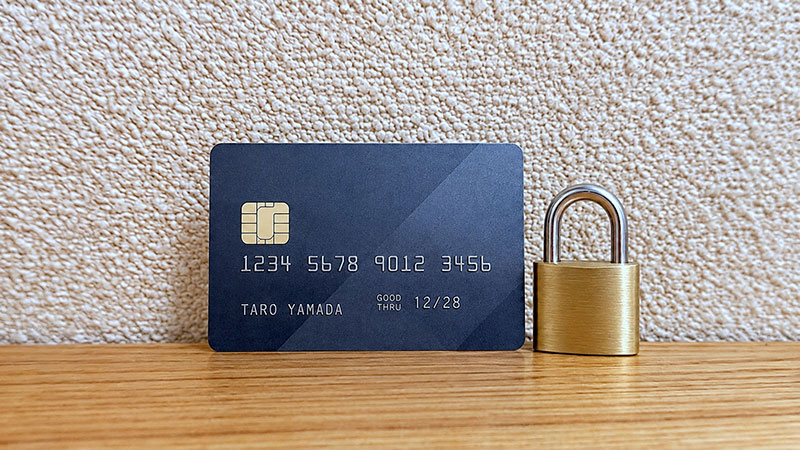
Why Don't I Sign for Credit Card Payments in Japan Anymore?
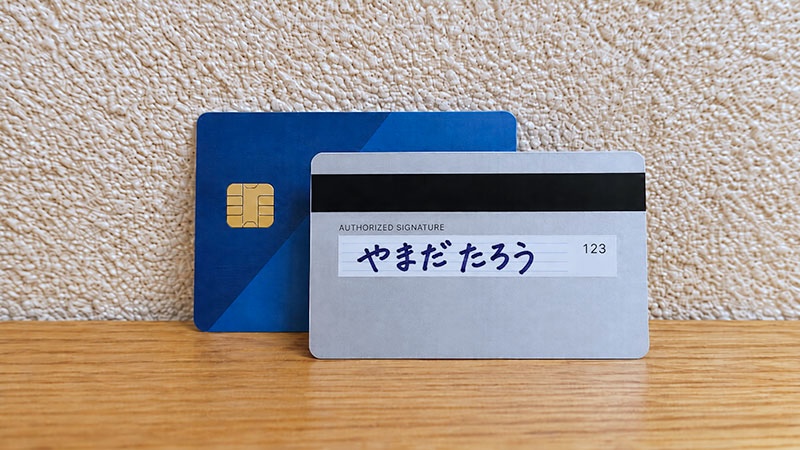
I thought signing for a credit card purchase was more secure than entering a PIN. It involved handwriting. A human had to check it. Surely all that effort counted for something?
Then I noticed that I hardly signed for purchases anymore.
I live in Japan, where the option to skip a chip card’s PIN check and sign instead—called PIN bypass—was discontinued at the end of March 2025. That is a change to Japan’s payment practices, rather than a worldwide deadline. But it answered a question I had been carrying around for years.
Remember signing the back of your credit card?
When I got my first credit card, I was told to sign the back before using it.
The surface was slippery. My handwriting looked nothing like my usual handwriting. It seemed as though the ink might rub off anyway. I wondered how useful the whole exercise could possibly be, and left some cards unsigned.
Looking back, that was hardly a brilliant plan. Someone finding an unsigned card could write their own version of the name printed on the front. An empty signature panel gave them a blank canvas.
Now some of my cards don’t even have a signature panel. Where did it go?
Signing at the checkout always made me slightly nervous
When I signed a receipt, the idea was that the cashier could compare it with the signature on my card.
Except my handwriting changes with the pen, the paper, and whether I’m standing at an awkward angle. I sometimes worried that the two signatures wouldn’t match and the cashier would say something.
Nobody ever did. A relief, although it didn’t exactly reassure me about the checking process.
I still assumed that signing must be the stronger security check because it took more effort. Maybe expensive purchases or particularly careful shops required it?
Why did Japan stop allowing PIN bypass?
A cashier comparing a few handwritten letters is doing a fairly subjective job, especially with a queue forming behind me.
Chip-and-PIN payments add a different kind of check: the chip helps authenticate the card, and the PIN helps verify the person using it. Those are separate jobs.
The Japan Credit Card Association’s merchant guidance explains that PIN bypass, which allowed a signature instead of PIN entry, ended in March 2025. When a Japanese chip transaction requires a PIN, forgetting it is no longer a reason to switch to a signature through that option.
This doesn’t mean every payment now needs a PIN. Contactless payments can work without one, depending on the card, terminal, and applicable rules.
I have several credit cards and bank cards with different PINs, so I have occasionally stood at a checkout waiting for my brain to retrieve the right one. Apparently that inconvenience is something I need to solve before reaching the register.
Other countries followed different timelines
If you’re reading this outside Japan, the disappearance of signatures may be old news.
Mastercard announced in 2018 that signatures would become optional on cards and receipts, and that issuers globally would no longer be required to include signature panels from April 2019.
That announcement also illustrates why “no signature” doesn’t automatically mean “PIN required.” The verification method depends on the payment system and circumstances. Japan’s 2025 change is one part of a larger shift away from handwriting.
Do I still need to sign the back of my card?
Some of my cards have a signature panel; others don’t. Some also hide the card number and other details from view. My wallet is slowly becoming a collection of surprisingly blank rectangles.
But a card with fewer visible details isn’t impossible to misuse if stolen. Contactless transactions may not require a PIN, and hiding a printed number doesn’t disable the payment functions.
For signing the back, I follow the issuer’s instructions. Japanese issuers such as JCB and Saison explain signature requirements for cards that have a panel. An unsigned card can affect protection under the issuer’s terms. Readers elsewhere should check their own issuer’s requirements.
My small checklist is:
- Check the issuer’s instructions if the card has a signature panel.
- Know the PIN before using a payment method that requires it.
- Report a lost card promptly, even if its number isn’t printed on it.
For the cards I still need to sign, I use an oil-based permanent marker. The product below is a Japanese marker; the link searches Amazon for it.
So the extra effort of signing wasn’t proof of stronger security after all. It was simply a very visible part of the process.
That left me wondering about the less visible parts: the chip, the magnetic stripe, and all those “anti-skimming” products. I went looking into those next.